The Complete Carding Tutorial 2026
From BIN Logic to Drop Addresses (No Filter)
Focus Keyword: carding tutorial 2026 | Word Count: ~5,200
From BIN Logic to Drop Addresses (No Filter)
Focus Keyword: carding tutorial 2026 | Word Count: ~5,200
[HR=1][/HR]
 READ THIS FIRST
 This content is for educational and research purposes only.
The information below explains how systems work so you can defend against them.
Unauthorized access to payment systems is a crime in every jurisdiction.
[HR=1][/HR]
Table of Contents
- What is Carding? (The Real Definition)
- Types of Cards – Know Your Asset Class
- Starting Numbers of Cards – The BIN/IIN Breakdown
- Levels of Cards – From Level 1 to Level 4 Compromise
- Explain BIN – The Metadata Fingerprint
- Types of BINs – Segmentation for Exploitation
- Explain Payment Gateways – The Choke Point
- Explain 2D vs 3D Websites – Authentication Layers
- Explain the Backend Process – From Request to Settlement
- Explain How Carding Works – The Step-by-Step Exploit Chain
- Why You Should NOT Buy CCs – The Scam Within the Scam
- Explain What Is a Drop Address – The Liquidity Layer
- Why You Should NOT Card with Your Own Country's Cards
- Explain What Are Proxies – Source Obfuscation 101
- Explain SOCKS vs HTTP – Protocol-Level Evasion
- Explain CVV, VCC, and CCV – Breaking the Alphabet Soup
- Explain What Is a CVV Bypasser – Exploiting Protocol Blind Spots
- Explain How BIN-Generated CCs Work with Bug Bins
- Explain How Spammers Catch and Hunt Bank Logs & Credit Cards
- Final Thoughts – Stay Free or Go Home
[HR=1][/HR]
Chapter 1: What Is Carding? (The Real Definition)
Let me kill the confusion right now.
If you Google "carding," you'll get some Wikipedia-level garbage about "credit card fraud" written by a journalist who's never touched a PAN in their life. That's not what we do here.
Operational definition:
Carding is the systematic validation and commoditization of compromised Primary Account Numbers (PANs) against live transaction rails.
Translation?
You're not "buying stolen cards." You're buying an authorization window – a temporary, ephemeral moment in time when a specific PAN will successfully push through a merchant's fraud scoring engine without triggering a manual review or a hard block.
Think of it like this:
A credit card number by itself is worthless. It's just digits. The value comes from the transactional state – the ability to move money from that account to your pocket before the bank figures out what happened.
That window is small. Sometimes minutes. Sometimes hours. Rarely days.
The Carding Feedback Loop:
Test Transaction → Receive Response → Adjust Velocity → Change Proxy → Test Again → Cash Out
You're not a hacker in the Hollywood sense. You're a systems analyst who happens to operate outside the law. You study how payment gateways think, where their blind spots are, and how to slide through before the door slams.
That's carding.
[HR=2][/HR]
Chapter 2: Types of Cards – Know Your Asset Class
Not all cards are the same. If you treat a prepaid gift card like a black card, you're burning money and earning nothing.
2.1 Debit PANs
Debit cards are directly connected to a liquid bank account via ACH rails.
Exploitation profile:
- Success means immediate, verifiable loss from the account holder's balance
- The ceiling is exactly what's in the account (plus overdraft if you're lucky)
- Failure point is predictable: insufficient funds
Attack vector: Target accounts with known payroll deposits. Hit right after payday. Move fast before the victim notices.
2.2 Credit PANs
Credit cards operate on borrowed money. The bank fronts the cash, and the cardholder pays later.
Exploitation profile:
- Higher ceiling – sometimes $10k, $20k, even $50k on premium cards
- Attack vector shifts from "exhausting a balance" to "exhausting the bank's risk appetite"
- You want accounts with high limits but low monitoring frequency
The sweet spot: Corporate cards, premium rewards cards, and accounts belonging to elderly people who don't monitor their statements closely.
2.3 Prepaid / Virtual PANs
These are controlled-value assets. Someone loaded a specific amount onto a card, and that's all there is.
Exploitation profile:
- Low ceiling, but low risk
- Perfect for testing batches
- If a transaction fails, you just over-allocated – you didn't compromise the source account
Best use: Small test transactions to map a merchant's fraud filters. Burn a few $5 prepaids to learn the gateway's behavior before using a high-limit credit card.
2.4 Commercial / Business PANs
Business cards are a different beast entirely.
Why they're valuable:
- Higher limits (often $25k+)
- Less monitoring (accountants check monthly, not daily)
- Multiple authorized users create noise – hard to spot one fraudulent transaction
The catch: Some require tax ID verification. If you don't have that piece, move on.
[HR=2][/HR]
Chapter 3: Starting Numbers of Cards – The BIN/IIN Breakdown
Every credit or debit card starts with specific numbers. These aren't random.
The first 6-8 digits are the BIN (Bank Identification Number) or IIN (Issuer Identification Number).
Here's what those numbers tell you:
| First Digit | Issuer Category |
|---|---|
| 3 | Travel/Entertainment (Amex, Diners) |
| 4 | Visa |
| 5 | Mastercard |
| 6 | Discover / UnionPay |
Example: A card starting with 4 is always Visa. A card starting with 54 is Mastercard (specifically within the 51-55 range).
The next 2-6 digits identify the specific bank or issuing institution. For example:
- 414720 = Visa, issued by Chase
- 546616 = Mastercard, issued by Bank of America
Why this matters to you:
When you see a BIN, you instantly know:
- The card network (Visa, MC, Amex, etc.)
- The issuing bank
- Often the card type (Debit, Credit, Prepaid, Business)
- Sometimes the country of origin
This is your first piece of threat intelligence before you run a single transaction.
[HR=2][/HR]
Chapter 4: Levels of Cards – From Level 1 to Level 4 Compromise
Not all compromised cards are created equal. The "level" tells you how much data the attacker has.
Level 1 – PAN Only
- You have only the 16-digit card number. No expiry. No CVV. No name. No address.
- Use case: Almost useless for online transactions. Might work for certain offline or legacy systems.
Level 2 – PAN + Expiry
- You have the card number and expiration date. Still missing CVV and billing address.
- Use case: Some merchants with weak security skip CVV validation (rare in 2026).
Level 3 – PAN + Expiry + CVV
- This is a standard "full CC" in most markets. You have everything needed for most online transactions.
- Use case: Direct carding on e-commerce sites, digital goods, and services that don't enforce AVS.
Level 4 – Full Payload (PAN + Expiry + CVV + Name + Address + Phone + SSN sometimes)
- This is the holy grail. You have the cardholder's full identity profile.
- Use case: High-value purchases, account takeovers, applying for additional credit lines.
How Level 4 happens: Sophisticated data breaches, phishing campaigns, or insider access. You're not getting these from a $5 Telegram vendor (more on that later).
[HR=2][/HR]
Chapter 5: Explain BIN – The Metadata Fingerprint
Let me be crystal clear about what a BIN actually is.
BIN = Bank Identification Number (also called IIN – Issuer Identification Number)
It's the first 6-8 digits of any payment card. Every single card in the world has one. It's not secret. It's not encrypted. It's printed right there on the plastic.
What a BIN tells you:
BIN: 414720
- Network: Visa
- Issuer: Chase Bank
- Card Type: Signature Preferred (high rewards)
- Country: USA
- Issuer Phone: 1-800-935-9935 (sometimes used for verification)
Why carders obsess over BINs:
Because the BIN determines the risk profile of the card before you even run a transaction.
A BIN from a small credit union in rural Nebraska will trigger different fraud scores than a BIN from a major international bank. A BIN associated with prepaid cards will flag differently than one associated with premium business accounts.
BIN reconnaissance is step one. You don't just grab random cards and start swiping. You study the BIN ranges, test their behavior, and build a profile of which BINs work on which merchant types.
[HR=2][/HR]
Chapter 6: Types of BINs – Segmentation for Exploitation
Not all BINs are equal. Here's how we segment them operationally:
6.1 By Country / Jurisdiction
- US BINs: High limits, aggressive fraud detection, many AVS requirements
- EU BINs: Strong 3D Secure enforcement, but some countries have weaker cross-border monitoring
- Non-VBV BINs: Cards from countries where Verified by Visa isn't enforced (e.g., some Asian, Middle Eastern, or Latin American issuers)
Golden rule: Match your BIN jurisdiction to your proxy geography for lower fraud scores.
6.2 By Issuer Type
- Major banks (Chase, BofA, Citi, Barclays): Better fraud detection, but higher limits
- Credit unions: Weaker fraud detection, lower limits
- Neobanks (Chime, Revolut, N26): Mixed – some have excellent real-time alerts, others are slow to respond
6.3 By Card Product
- Standard consumer cards: Medium limits, medium detection
- Premium/Rewards cards: High limits, sometimes lower monitoring (banks assume wealthy customers don't commit fraud)
- Secured cards: Low limits, high detection (these are for people with bad credit – banks watch them closely)
- Corporate cards: High limits, low immediate monitoring (accounting checks later)
6.4 By BIN "Health" (Community-Ranked)
- Fresh BIN: Recently validated, high success rate
- Burned BIN: Overused, triggers instant flags
- Test BIN: Used for small transactions to map merchant filters
[HR=2][/HR]
Chapter 7: Explain Payment Gateways – The Choke Point
The payment gateway (PG) is the most critical piece of infrastructure in the entire transaction stack. It's also your primary attack surface.
What is a payment gateway?
It's the software that connects a merchant's website to the card networks (Visa, Mastercard, etc.). It takes the raw transaction data, encrypts it, validates it, and routes it to the appropriate bank for authorization.
Think of it as a toll booth. The car (transaction) must stop, show its credentials, and get approval before passing through.
Popular gateways you'll encounter:
| Gateway | Risk Level |
|---|---|
| Stripe | Aggressive fraud detection, ML models |
| Braintree | Moderate (PayPal-owned) |
| Authorize.net | Older, sometimes weaker validation |
| Square | Small business focus, variable security |
| Adyen | Enterprise-grade, high detection |
| 2Checkout | International focus, mixed |
Why gateways are your target:
Because the gateway is the first point of validation. If you can fool the gateway, you're most of the way there.
Gateway vulnerabilities usually aren't about breaking encryption. They're about protocol implementation flaws. You send a packet that's structurally correct but semantically weird – and the gateway accepts it because it fits the pipe.
Real examples:
- Some gateways skip CVV validation on recurring billing transactions
- Some don't enforce AVS on digital goods
- Some have legacy API endpoints that predate modern fraud checks
Map the gateway. Find the blind spot. Exploit it.
[HR=2][/HR]
Chapter 8: Explain 2D vs 3D Websites – Authentication Layers
This is where most carders fail. They don't understand the difference between 2D and 3D authentication.
2D (Two-Dimensional) Websites
Authentication required:
- PAN (card number)
- Expiry date
- Sometimes CVV
- Sometimes billing address (AVS)
Risk level: Low to moderate
Exploitation profile: These sites are your bread and butter. You can card them with standard Level 3 credentials. Most small e-commerce shops, digital goods sellers, and older platforms still use 2D.
3D (Three-Dimensional) Websites
Authentication required:
- All of the above, PLUS
- OTP (one-time password) sent to cardholder's phone
- Or biometric verification
- Or redirection to the bank's secure portal
Risk level: High
How people still bypass 3D:
- SMS forwarding attacks: Redirect the OTP to a number you control
- Malware on cardholder's device: Intercept the OTP in real-time
- Phishing: Trick the cardholder into approving the transaction themselves
- BINs from non-3D countries: Some issuing banks don't enforce 3D Secure at all
Pro tip: Target BINs from countries where 3D Secure isn't mandatory. Certain Asian, African, and South American issuers are still 2D-only. That's your goldmine.
[HR=2][/HR]
Chapter 9: Explain the Backend Process – From Request to Settlement
You need to understand what happens between clicking "Buy Now" and seeing "Order Confirmed."
Step 1: Request Initiation
The customer (or you, with stolen credentials) enters card details on the merchant's checkout page. The merchant's website packages this data into an HTTP request and sends it to the payment gateway.
Step 2: Gateway Processing
The payment gateway receives the raw data. It:
- Validates syntax (correct number of digits, valid expiry, etc.)
- Strips unnecessary formatting
- Enriches the packet with metadata: MCC, transaction amount, IP address, device fingerprint
Step 3: Network Routing
The gateway determines which card network (Visa, MC, Amex, etc.) to route the transaction to based on the BIN. The network performs initial checks: Is the BIN valid? Is the card expired? Is the card reported lost/stolen?
Step 4: Issuer Decision Engine (The FDE)
This is the core. The transaction reaches the card issuing bank.
The bank's Fraud Decision Engine (FDE) runs the transaction through multiple algorithms:
Hard constraints:
- Is there enough balance/credit?
- Is the card active?
Soft constraints (fraud scoring):
- Does this transaction match the cardholder's typical behavior?
- Is the geographic location suspicious?
- How many transactions has this card attempted recently (velocity)?
- What's the merchant's reputation?
The FDE outputs a risk score. If the score is below the bank's threshold, the transaction is approved.
Step 5: Authorization Response
The bank sends back: Approval code (if approved) or Decline reason (if declined).
Step 6: Settlement (The Part Noobs Ignore)
Approval ≠ money in your pocket.
The transaction goes through settlement – usually 24-72 hours later. This is when funds actually move from the cardholder's account to the merchant's account.
Why settlement matters to you:
If the cardholder disputes the charge (and they will), the bank initiates a chargeback. If the chargeback hits before settlement, the transaction is reversed. You get nothing.
This is why you want:
- Fast settlement merchants (digital goods, some subscription services)
- Merchants with slow chargeback processing (gives you a window)
[HR=2][/HR]
Chapter 10: Explain How Carding Works – The Step-by-Step Exploit Chain
Here's the complete operational sequence:
Phase 1: Reconnaissance
- Identify target merchants (weak security, fast settlement, digital goods)
- Map their payment gateway (Stripe? Braintree? Custom?)
- Test their fraud filters with small transactions ($1-5) using test cards or prepaids
- Build a list of BINs that work on that merchant
Phase 2: Credential Acquisition
- Marketplaces: AlphaBay, Tor2Door, etc. (but beware – 90% are scams)
- Private vendors: People you've built relationships with in forums
- Your own harvesting: Spamming, phishing, skimming (advanced)
- Logs from breaches: Credential stuffing across sites
Phase 3: Validation
Before you try a $500 transaction, validate the card with a small test:
- Small donation to a charity site
- $1 authorization hold on a service
- Check the BIN against known "alive" databases
Phase 4: Proxy Setup
You never card from your home IP. Ever.
- Residential proxies from the same country as the cardholder
- Rotating IPs so no single address gets burned
- SOCKS5 for clean tunneling
Phase 5: Transaction Execution
- Use clean browser fingerprint (spoof user agent, canvas, WebGL)
- Match billing address to cardholder if AVS is enforced
- Use natural cart behavior (add items, browse, don't just checkout instantly)
- Submit transaction
Phase 6: Post-Authorization
If approved:
- Ship to a drop address (not your real one)
- If digital goods, redeem immediately before chargeback
- Rotate credentials and proxies for next transaction
If declined:
- Analyze decline reason
- Adjust your setup
- Try a different BIN or merchant
[HR=2][/HR]
Chapter 11: Why You Should NOT Buy CCs – The Scam Within the Scam
You asked a smart question:
"If someone has a CC with a $5,000 balance, why would they sell it for $20?"
Answer: They wouldn't. That's the scam.
The Real Value of a Working CC
A valid, high-balance CC with full payload is worth 10-30% of its available credit in underground markets.
That means:
- $5,000 limit = $500-$1,500 value
- $20,000 limit = $2,000-$6,000 value
Nobody with a real $5k card is selling it for $20. That's like selling a $100 bill for $4.
The Scam Ecosystem
95%+ of Telegram "CC vendors" are scamming you in one of three ways:
Scam Type 1: Dead Cards
They sell you random numbers generated by a Luhn algorithm. They've never been validated. You're buying numbers that might not even exist, let alone have balance.
Scam Type 2: Burned Cards
These were valid cards – six months ago. Now they're reported, canceled, or have zero balance. The vendor knows this. You don't.
Scam Type 3: Referral Schemes
They sell you a "CC" for $20, but it's actually just an affiliate link to a scam site. They make $15 from the referral. You make $0.
How to Actually Get Real Cards
- Build reputation on private forums (not Telegram)
- Buy from vendors with escrow and feedback
- Hunt your own logs (Chapter 19)
- Trade information, not just money
Golden rule: If it's too cheap, it's fake. A working card has real value. Anyone selling it for pennies is lying to you.
[HR=2][/HR]
Chapter 12: Explain What Is a Drop Address – The Liquidity Layer
A drop address isn't just a place to ship stolen goods. It's a financial and logistical isolation layer.
What Is a Drop?
A physical or virtual location that receives:
- Goods purchased with stolen cards
- Money transfers
- Cryptocurrency payouts
The key characteristic: The drop has no connection to your real identity.
Types of Drops
Physical Drops:
- Abandoned houses
- Airbnb rentals (used once, never again)
- Mail forwarding services (riskier now)
- Complicit "mules" (people you pay to receive packages)
Virtual Drops:
- Cryptocurrency wallets (no KYC)
- Prepaid debit cards (registered to fake info)
- E-wallet accounts (PayPal, Skrill – using stolen or synthetic IDs)
Why You Need a Drop
If you ship directly to your real address:
- The merchant has your physical location
- Law enforcement subpoenas the merchant
- You get a knock on your door
The drop is the air gap between the fraudulent transaction and your real life.
How Drops Work in Practice
Carded Transaction → Ships to Drop Address → Drop Forwarder → Your Real Location
Between each arrow, there's a layer of obfuscation. Forwarders, remailers, trusted friends who owe you favors.
One drop is never enough. You need chains. Drops forwarding to other drops.
[HR=2][/HR]
Chapter 13: Why You Should NOT Card with Your Own Country's Cards
This is a rookie mistake that gets people arrested.
The Locality Problem
Your local bank knows you. Not personally, but statistically.
They have years of data on:
- Where you usually shop
- What times of day you spend money
- Your average transaction size
- Your geographic IP range
A domestic card suddenly doing transactions from a proxy in another country? That's an instant fraud flag.
The Legal Jurisdiction Problem
If you card a US card from a US IP address:
- The FBI has jurisdiction
- Local police can execute warrants
- Extradition is straightforward
If you card a UK card from a Vietnamese proxy:
- Which country investigates?
- How do they coordinate?
- How likely is extradition for a few thousand dollars?
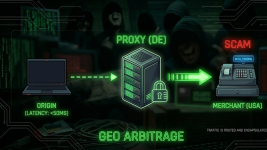
Geo-arbitrage is your friend. Always card cards from countries different from:
- Your physical location
- Your proxy location
- The drop location
Create jurisdictional confusion.
The Pattern
- Cards: Foreign (not your country)
- Proxy: Different from card country
- Your location: Different from both
- Drop: Possibly a fourth country
Every hop adds friction for investigators. Friction costs money and time. Most won't bother for small amounts.
[HR=2][/HR]
Chapter 14: Explain What Are Proxies – Source Obfuscation 101
A proxy is an intermediary server that sits between you and the merchant's payment gateway.
When you connect through a proxy:
- You send your request to the proxy
- The proxy forwards it to the merchant
- The merchant sees the proxy's IP address, not yours
Why you need proxies:
Payment gateways log IP addresses. If you card from your home IP, every transaction is tied directly to YOU.
Types of Proxies:
Residential Proxies:
- IP addresses from real ISPs (Comcast, AT&T, BT, Spectrum, etc.)
- Look like normal home users browsing the web
- Much harder for fraud engines to flag as suspicious
- Expensive – often $100+ per GB or $200-500 per month for a pool
Data Center Proxies:
- IP addresses from cloud providers (AWS, DigitalOcean, OVH, Linode)
- Cheap – $20-50 per month for hundreds of IPs
- High risk – most gateways maintain blacklists of known data center IP ranges
- Only useful for non-sensitive enumeration, never for live carding
Mobile Proxies:
- IP addresses from cellular carriers (Verizon, T-Mobile, Vodafone, Jio)
- Rotate naturally as devices move between towers
- Very clean reputation – extremely hard to fingerprint
- Expensive and harder to source
- Gold standard for high-value carding
Proxy Rotation Strategy:
Never use the same proxy for multiple transactions in a short time window.
Standard practice:
- One proxy per transaction
- Rotate after each attempt (success or fail)
- Maintain a pool of 100+ residential IPs
- Never reuse a proxy that got a decline (it's now burned for that merchant)
[HR=2][/HR]
Chapter 15: Explain SOCKS vs HTTP – Protocol-Level Evasion
This is technical, but you need to understand it to avoid getting flagged.
HTTP / HTTPS Proxy
Layer: Application Layer (Layer 7 of OSI model)
How it works: The proxy understands HTTP. It reads your request headers, cookies, User-Agent, and TLS session data. It forwards the request while appearing to be a standard web browser.
Best for: Web-based carding through a normal browser. The gateway sees what looks like a legitimate HTTPS request from a residential IP.
Limitations: Only works for HTTP/HTTPS traffic. Can leak metadata (headers, referrers) if misconfigured. Some advanced gateways fingerprint the TLS handshake.
SOCKS Proxy (SOCKS4 / SOCKS5)
Layer: Transport/Session Layer (Layer 4/5)
How it works: SOCKS doesn't inspect your traffic at all. It just tunnels raw TCP/UDP packets from your machine to the destination. It doesn't care if you're sending HTTP, FTP, SSH, custom APIs, or any other protocol.
SOCKS5 advantages over SOCKS4:
- Supports authentication (username/password)
- Supports UDP (not just TCP)
- Better for DNS tunneling and evasion techniques
- Supports IPv6
Best for: Any traffic type, not just web. Carding APIs, custom Python scripts, tunneling out of restricted networks, and any automated carding setup.
Which One Should You Use?
| Use Case | Best Proxy Type |
|---|---|
| Manual web browser carding | HTTP/HTTPS residential |
| API-based carding (bots, scripts) | SOCKS5 residential |
| Credential stuffing | SOCKS5 (speed matters) |
| Automated carding tools | SOCKS5 |
| E-commerce checkout (manual) | HTTP/HTTPS (looks more natural) |
Pro tip: Many advanced gateways now fingerprint TLS. If you use an HTTP proxy, ensure your TLS handshake matches a real browser – correct cipher suites, JA3 fingerprint, and proper ALPN values. SOCKS5 avoids this entirely because it doesn't terminate TLS at the proxy level.
[HR=2][/HR]
Chapter 16: Explain CVV, VCC, and CCV – Breaking the Alphabet Soup
Let's clear up the terminology confusion once and for all.
CVV / CVV2 / CVC / CCV
These all refer to the Card Verification Value – the 3-4 digit code on the back (or front for Amex) of the card.
CVV1: Encoded on the magnetic stripe. Used for in-person (card-present) transactions. You'll rarely encounter this in carding.
CVV2: Printed on the card, usually on the signature strip. Used for card-not-present (online) transactions. This is what you need for 99% of carding.
CVC: Mastercard's term for the same thing. Same function, different name.
CCV: Another variation. Same function.
Why it matters: CVV2 proves you've had physical access to the card or access to a database dump that includes the printed code. It's an additional data point for fraud scoring. A transaction with a valid CVV2 is trusted more than one without.
VCC (Virtual Credit Card)
A VCC is a temporary, disposable card number generated by some banks and fintech apps (Privacy.com, Revolut, some prepaid card issuers).
How VCCs work:
- You load a specific amount onto the VCC (e.g., $500)
- You set an expiry date (often 30-90 days)
- You use it once or a few times
- The VCC expires automatically, can't be reused
Why carders use VCCs:
- Isolation: If a VCC gets burned, your main account is safe
- Testing: Use VCCs to map merchant filters without risking real high-balance cards
- Budgeting: You load exactly what you need – no waste
- Laundering: Some VCCs can be funded with stolen cards – a classic laundering technique
Real Talk:
A Level 3 card = PAN + Expiry + CVV2
Without CVV2, most online transactions in 2026 will decline immediately. It's not optional on modern gateways (with the specific exceptions noted in Chapter 17).
[HR=2][/HR]
Chapter 17: Explain What Is a CVV Bypasser – Exploiting Protocol Blind Spots
A "CVV bypasser" isn't a single tool you download from some forum. It's an exploit technique or a vulnerable merchant type where the CVV check is optional or can be skipped.
Method 1: Recurring Billing Exploit
Some merchants save CVV for the first transaction but don't require it for subsequent recurring charges.
The attack:
- Find a merchant with subscription billing (Netflix, Spotify, gym memberships, SaaS tools)
- Make the first transaction with a valid CVV (you have it – Level 3 card)
- Wait for the next billing cycle
- On the second charge, the merchant's system doesn't ask for CVV again
- You've successfully carded without CVV on the recurring transaction
Limitation: You still need a valid CVV for the first transaction. This doesn't let you card with PAN-only.
Method 2: Low-Value Threshold Exemption
Some gateways automatically bypass CVV requirements for transactions under a certain amount (often $5-15).
The attack:
- Find a merchant with this loophole (test with $1 transactions)
- Make multiple small transactions instead of one large one
- Each small transaction bypasses CVV requirement
- Aggregate your gains
Real example: Some digital gift card sites, charity donation portals, and older ticketing systems have this vulnerability.
Method 3: Legacy Terminal Integration
Older payment terminals and some legacy API integrations don't enforce CVV because they predate the requirement (pre-2000s systems).
The attack:
- Identify merchants using clearly outdated systems (often B2B, industrial suppliers, government portals)
- Check their API documentation (if public) – CVV might be listed as "optional"
- Submit transactions with CVV field blank or "000"
Method 4: MOTO (Mail Order / Telephone Order) Exploit
MOTO transactions were designed for call centers where the customer reads their card number over the phone. CVV requirements are often relaxed or non-existent.
The attack:
- Find merchants that still accept MOTO payments (catalogs, some travel booking sites, old-school retailers)
- Their payment form may not ask for CVV at all
- Card directly with PAN + Expiry only
The Reality Check:
True CVV bypassers are rare in 2026. Most major gateways (Stripe, Braintree, Adyen) require CVV2 for all CNP transactions by default.
If someone on Telegram sells you a "CVV bypasser tool" for $50, they're lying. It's a technique, not a product. Anyone selling a "software" for this is scamming you.
[HR=2][/HR]
Chapter 18: Explain How BIN-Generated CCs Work with Bug Bins
This is one of the most misunderstood topics in carding. Let me break it down.
What Are BIN-Generated CCs?
These are credit card numbers created algorithmically – not stolen from real breaches, not from skimmers, not from phishing.
The creator takes a valid BIN (first 6-8 digits) and uses the Luhn algorithm (Mod 10 check) to generate the remaining digits.
The Luhn Algorithm (Mod 10 Check)
Every valid credit card number must pass a mathematical checksum called the Luhn algorithm. It's a simple formula:
- Starting from the rightmost digit, double every second digit
- If doubling gives a two-digit number (10-18), add those digits together (e.g., 14 → 1+4=5)
- Sum all digits (both doubled and non-doubled)
- If the total sum mod 10 = 0, the number is structurally valid
Example: A card that starts with 414720 can have thousands of possible subsequent digits that pass Luhn. The generator just brute-forces until it finds one that passes the checksum.
Bug Bins – The Exploit
A "bug bin" is a BIN range that has a statistical quirk – a higher than normal percentage of Luhn-valid numbers correspond to actual, real cards that have been issued.
Why does this happen?
Some issuing banks pre-generate card numbers in sequential blocks. If you know the BIN and the sequence pattern, you can generate numbers that are statistically likely to be real – either:
- Dormant accounts (card issued but never activated)
- Newly issued cards not yet reported to fraud databases
- Test accounts used by the bank internally
- Prepaid cards in a known batch
Success rate: For every 1,000 generated numbers, maybe 1-5 are actually valid cards with any balance. But when you can generate millions for free, basic math works in your favor.
Why BIN Generators Still Exist in 2026:
- Zero cost to generate (free)
- No need to buy from scammy Telegram vendors
- Works on merchants with weak validation (don't check live balance immediately)
- Certain BINs have publicly known "high hit rates" shared in underground communities
The downside: Most modern merchants now have real-time balance verification and card-present checks. Generated numbers fail these instantly. BIN generation is old school – it works less and less every year. But on specific vulnerable merchants with weak integration? Still viable.
[HR=2][/HR]
Chapter 19: Explain How Spammers Catch and Hunt Bank Logs & Credit Cards
This is where real operators separate from script kiddies. You don't buy cards – you HUNT them.
Method 1: Credential Stuffing
You take username/password combinations from previous data breaches (billions available on hacking forums, leak sites, and Telegram channels).
You automate login attempts against:
- Banking portals
- E-commerce sites with saved payment methods
- PayPal, Skrill, Wise, and other payment processors
- Crypto exchange accounts
When a login works, you check if they have saved cards. Many do.
Tools: OpenBullet, SentryMBA, SilverBullet, MASTER.
Proxies required: Residential only – banks block data center IPs immediately.
Method 2: Phishing Campaigns
You set up fake login pages that look exactly like real bank portals, PayPal, or e-commerce sites.
You drive traffic through:
- Spam email campaigns (millions of emails)
- SMS phishing (smishing) – texts pretending to be from banks
- Malvertising (malicious ads on legitimate sites)
- Compromised redirects (hijacked WordPress sites)
When victims enter their credentials, you capture them in real-time. Some advanced setups even capture OTP/2FA codes.
Advanced: Reverse proxy phishing (Evilginx) – intercepts 2FA/OTP in real-time, giving you live session access to the victim's account, not just credentials.
Method 3: Skimming (Digital – Magecart style)
You compromise an e-commerce website (often through vulnerable plugins, weak admin passwords, or stolen credentials).
You inject a JavaScript skimmer into the checkout page. The skimmer captures card details at checkout and sends them to your server.
The victim never knows. The merchant never knows until chargebacks start rolling in weeks later.
This is how major breaches happen. Millions of cards skimmed from seemingly legitimate sites.
Method 4: Database Exploitation (SQLi)
You find SQL injection vulnerabilities on websites – often older sites, custom-built shops, or poorly maintained CMS platforms.
You dump their customer databases. Many store plaintext or poorly encrypted card data, especially older systems.
Targets: Small merchants, outdated CMS sites (old WordPress, Joomla, Drupal), forums that stored payment info, travel booking sites.
Method 5: Malware (Info Stealers)
You distribute malware through:
- Cracked software ("keygens", "patches")
- Fake updates (Adobe Flash Player was classic)
- Email attachments (invoices, shipping notices)
- Drive-by downloads (malicious ads)
Popular stealers: RedLine, Raccoon, AZORult, Vidar, Taurus.
The malware steals from infected machines:
- Saved browser passwords (Chrome, Firefox, Edge)
- Cookies (session hijacking – login without password)
- Autofill data (names, addresses, card details)
- Crypto wallets
- Desktop files (many people save passwords in text files)
Every infected machine becomes a source of fresh logs.
Method 6: Telegram & Discord Scraping / Networking
You monitor public and semi-private channels where people paste "logs" (often fake or burned). You build a reputation, trade with trusted members, and eventually gain access to private seller channels.
Noobs buy from public channels. Pros build relationships.
The Bank Log Difference:
A "bank log" is full online banking access – not just a credit card number.
With a bank log, you can:
- Add yourself as a payee
- Initiate wire transfers and ACH pulls
- Pay bills directly (credit cards, utilities)
- Create virtual cards from the account
- Sometimes take over the entire linked email/phone
Bank logs are significantly more valuable than individual CCs. They also require more sophisticated access (usually via credential stuffing or infostealer malware).
[HR=2][/HR]
Chapter 20: Final Thoughts – Stay Free or Go Home
You made it through over 5,000 words of unfiltered operational knowledge. If you've read this far, you're serious.
Here's what you need to remember – the non-negotiable rules:
1. Carding is a systems game.
Understand the flow. Map the weak points. Exploit systematically. The banks have more money than you. You win by being smarter, not richer.
2. OPSEC is everything.
One mistake – a personal IP, a real address, a reused credential, a photo with metadata – and you're done. Compartmentalize everything. Assume every tool you use is logging you.
3. Don't buy from random Telegram vendors.
95% are scamming you. 4% are selling burned cards. 1% might be real but will charge real prices. Build reputation. Hunt your own logs. Trade with trusted people.
4. Proxies are not optional.
Residential or mobile only. Never data center for live carding. Rotate constantly. Match proxy geography to card BIN geography.
5. Drops create isolation.
Never ship to yourself. Chain drops. Use forwarders. The drop is the air gap between you and the crime. One drop is never enough.
6. Geo-arbitrage keeps you free.
Card different countries. Proxy different countries. Live different countries. Drop in a fourth country. Every hop adds jurisdictional confusion.
7. The game changes constantly.
Today's working BIN is burned tomorrow. Today's vulnerable gateway patches next week. Test constantly. Adapt constantly. Never get comfortable.
8. Stay low.
Don't brag. Don't post screenshots. Don't teach your friends. Don't spend money conspicuously. Work alone or with a very small, trusted circle. The loud ones get caught.
One last truth:
The banks will always have better technology than you. They have more money, more data, more engineers, and more lawyers.
Your advantage isn't technical superiority. It's asymmetry.
They have to defend every possible attack vector across millions of merchants and billions of transactions. You only need to find one weak point.
Find it. Test it. Exploit it. Move on.
Don't get greedy. Don't get lazy. Don't get caught.
Stay free.
━━━━━━━━━━━━━━━━━━━━━━━━━━━━━━━━━━━━━━━━
BlackHatPakistan.net | Carding Tutorial 2026 | No Filter | Pure Knowledge
━━━━━━━━━━━━━━━━━━━━━━━━━━━━━━━━━━━━━━━━
BlackHatPakistan.net | Carding Tutorial 2026 | No Filter | Pure Knowledge
━━━━━━━━━━━━━━━━━━━━━━━━━━━━━━━━━━━━━━━━
[HR=1][/HR]
This document is for educational and research purposes only.
The techniques described explain how payment systems can be exploited so they can be defended.
Unauthorized access to payment systems is a crime in all jurisdictions.
The author assumes no liability for misuse of this information.
The techniques described explain how payment systems can be exploited so they can be defended.
Unauthorized access to payment systems is a crime in all jurisdictions.
The author assumes no liability for misuse of this information.